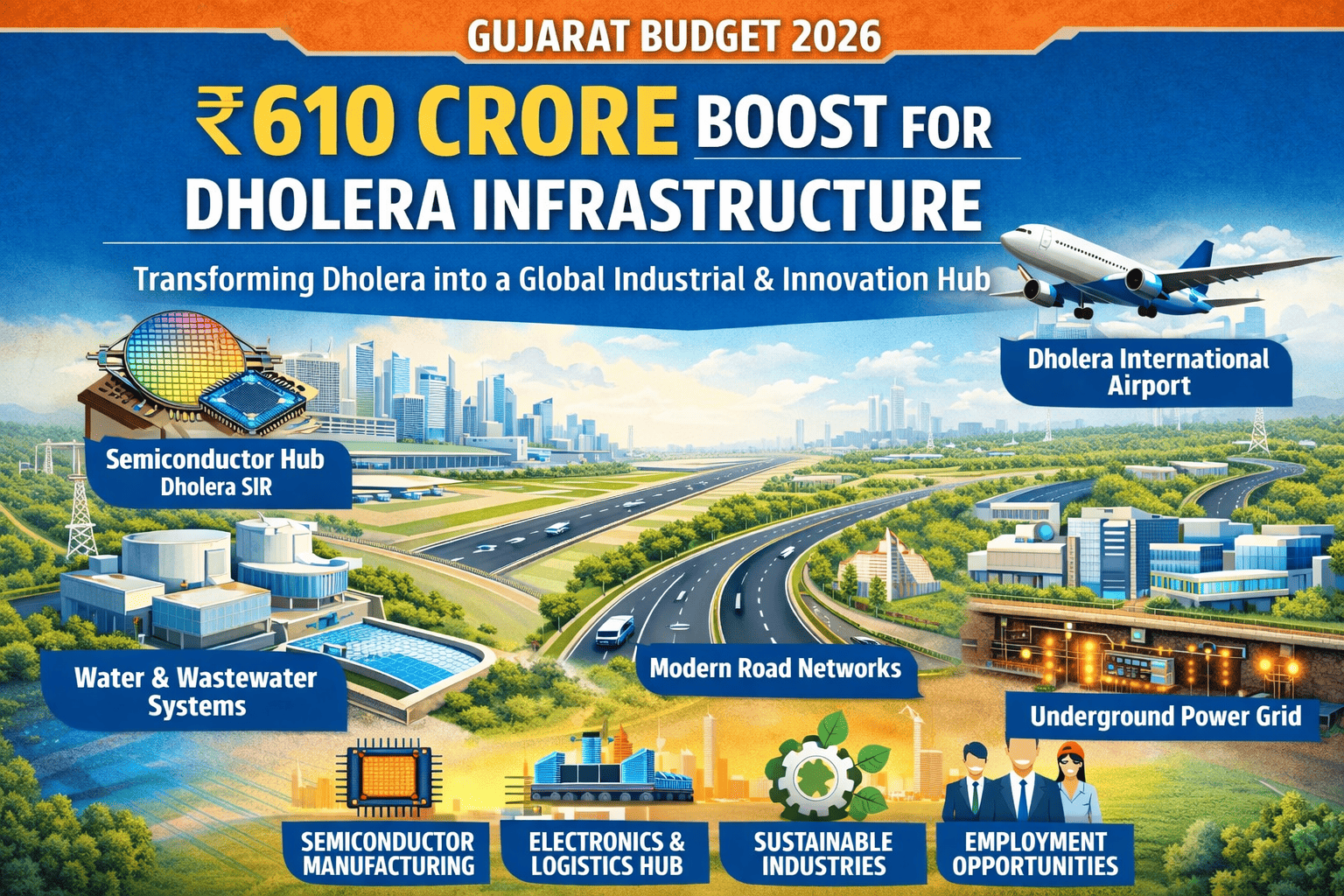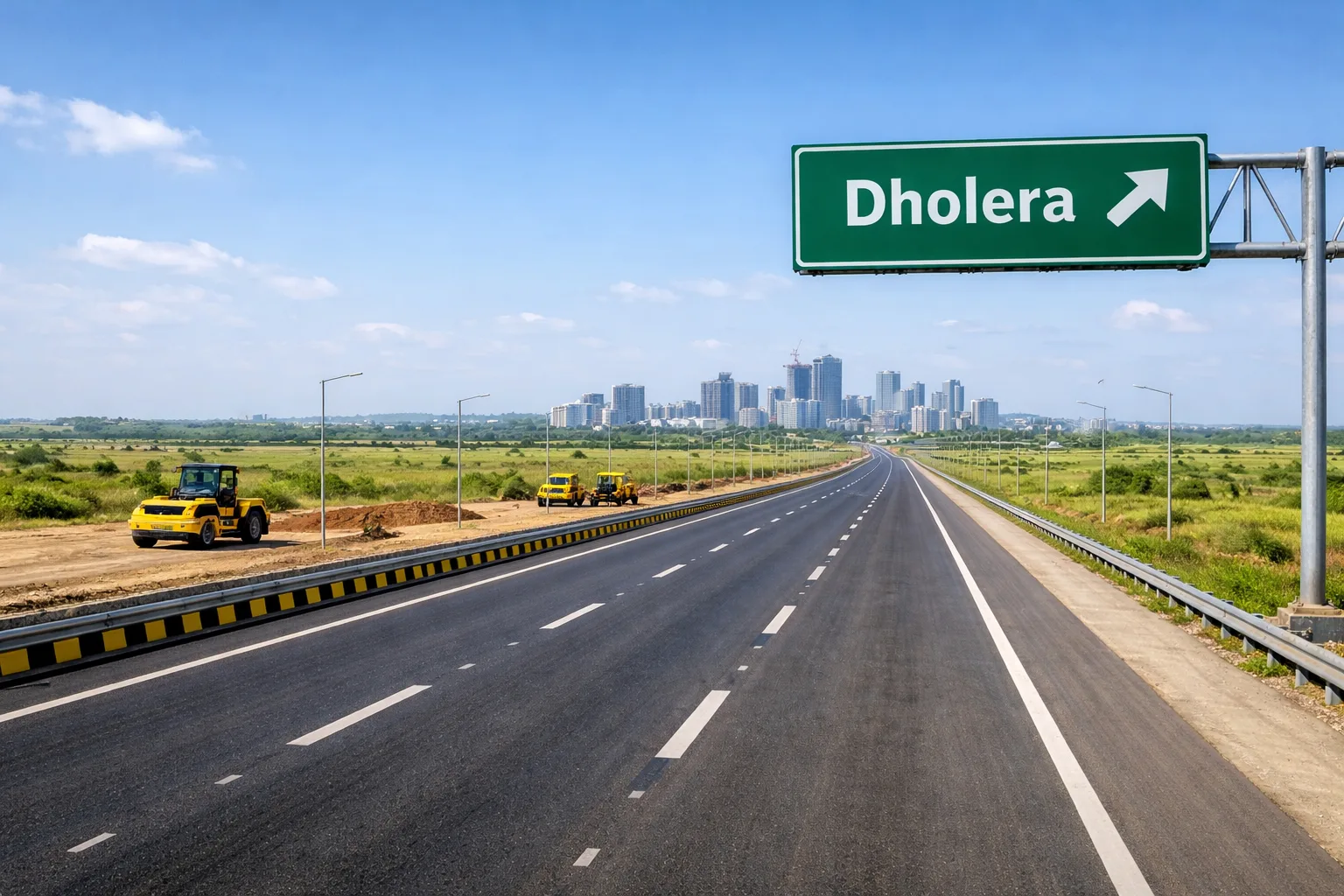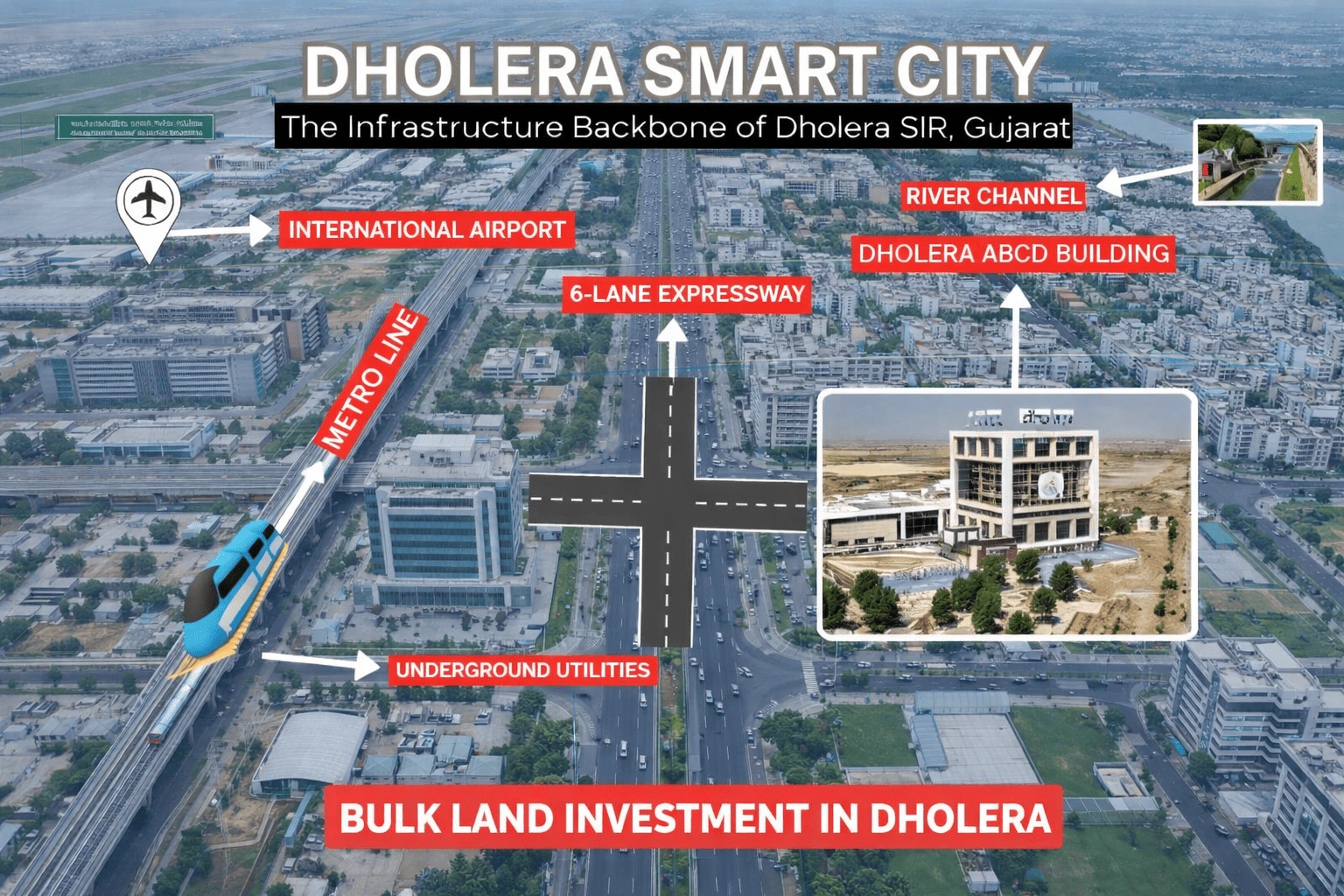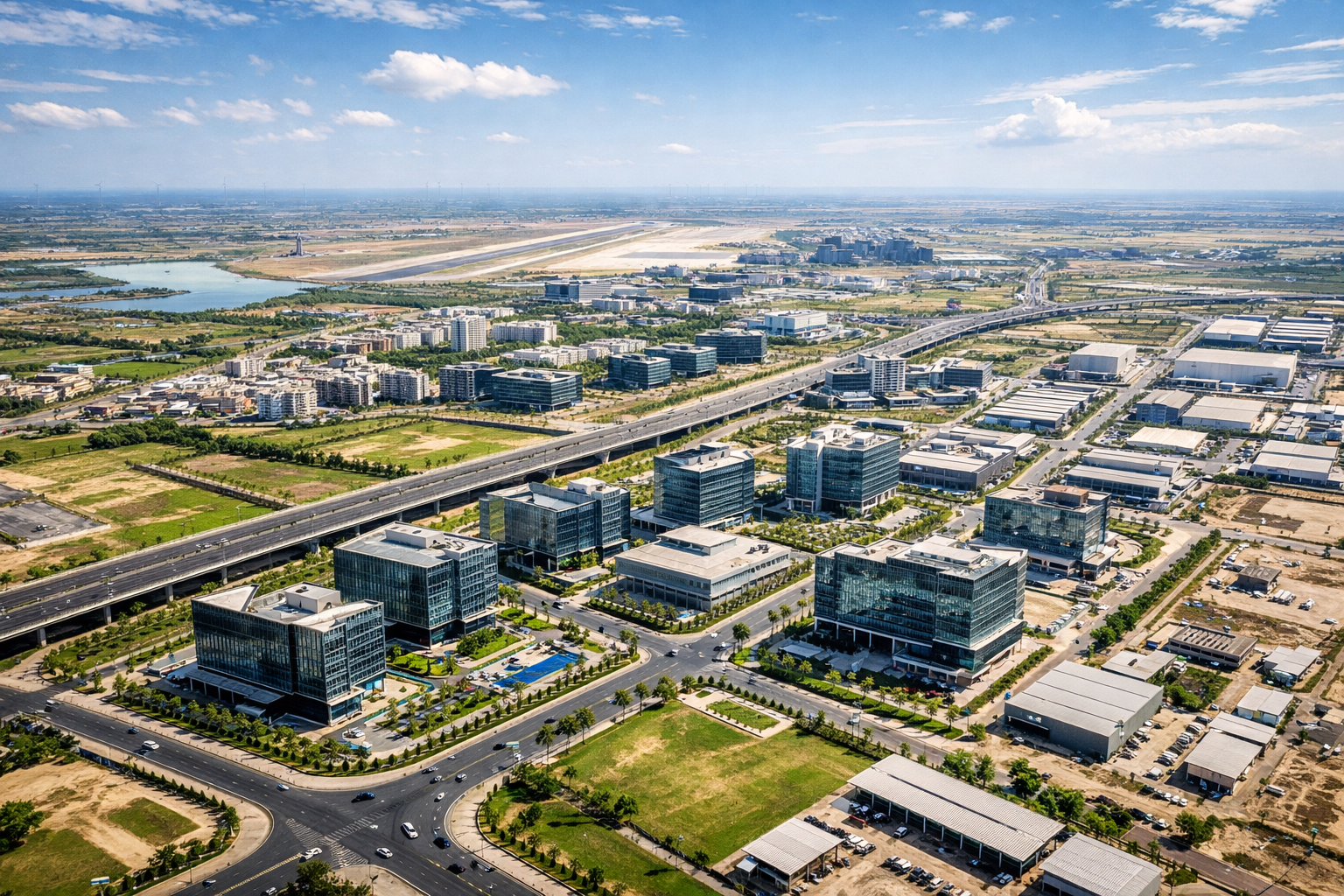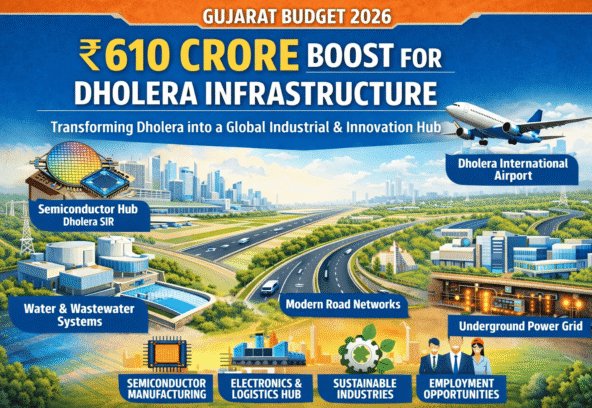


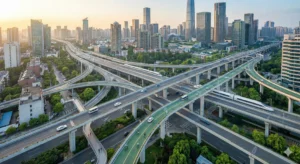
 Dholera Smart City is rapidly emerging as the most futuristic mobility ecosystem in India—an urban model built from the ground up to support green transport, real-time digital management, and technologically advanced public infrastructure. Envisioned under the Delhi–Mumbai Industrial Corridor (DMIC), Dholera integrates clean energy, sustainable design, and intelligent mobility systems to reshape how modern Indian cities should move.
Spread across 920 sq. km, the city’s planning prioritizes smart infrastructure, seamless connectivity, and eco-friendly commuting. Its greenfield advantage allows planners to design mobility solutions without legacy constraints, making Dholera a blueprint for India’s future mobility model.
1. Smart Infrastructure: The Foundation of Dholera’s Mobility Vision
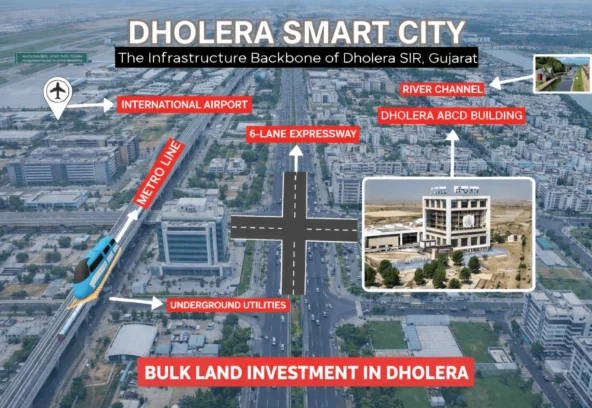
At the center of Dholera’s transport strategy is its smart infrastructure, designed with an advanced plug-and-play model. Each road corridor carries underground utility ducts for ICT cables, power, gas, stormwater, potable water, recycled water, and future transit lines—allowing rapid upgrades without digging.
Smart Infrastructure Highlights
- Cycle tracks and safe pedestrian pathways
- LED street lighting and energy-efficient systems
- City-wide Wi-Fi integration
- Centralized control for real-time monitoring
- Smart meters and SCADA-enabled utility management
- 100% recycled water network and green buffer zones
This integrated approach enables uninterrupted mobility while ensuring sustainability and ease of operations.
2. A Mobility-Centric Master Plan for a Global City
Dholera’s master plan is mobility-first, featuring linear development, zoning-based movement, and strategic placement of industries, residences, and commercial hubs.
Master Plan Mobility Features
- A structured hierarchy of arterial, sub-arterial, and collector roads
- Dedicated logistics corridors for freight mobility
- Efficient land-use distribution reducing unnecessary travel
- Walk-to-work clusters minimizing carbon footprint
- Future-ready mass rapid transit alignments
- Integrated connectivity to the expressway and global airport
The city’s thoughtfully designed master plan ensures smoother movement, reduced congestion, and smarter travel decisions for decades to come.
3. Smart EV Ecosystem: Powering India’s Green Mobility Shift
Dholera is set to become one of India’s strongest smart EV ecosystems with incentives for electric vehicles, renewable energy production, and EV-friendly urban design.
EV-Focused Infrastructure
- EV charging corridors along arterial routes
- Solar-powered EV charging stations
- Battery-swapping points in commercial and industrial clusters
- Electric public transit systems
- Energy-efficient street grid for EV load management
This EV-forward planning not only reduces emissions but also positions Dholera as a major hub for electric mobility manufacturing and innovation.
4. Advance Technology Transforming Transport Operations
Dholera integrates advance technology at every layer of mobility—from street design to public transit.

Key Mobility Technologies
- IoT-based data collection
- AI-driven traffic controls
- Cloud-integrated transport systems
- Sensor-based road safety alerts
- Digital mapping for live congestion updates
- Smart card and mobile app systems for public transport
The result is a city capable of learning user patterns, predicting demand, and improving transport flow without manual intervention.
5. Road Design Built to International Standards
Dholera’s road design follows global benchmarks with long-term sustainability, safety, and speed in mind.
Road Design Features
- 18–70 meter Right of Way
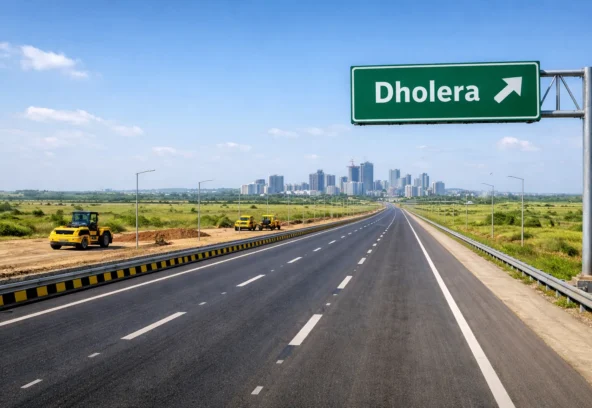
- 4–6 lane high-speed corridors
- Dedicated cycling and pedestrian lanes
- Non-motorized mobility routes
- Smart signaling for smooth intersections
- Under-road utility tunnels to keep the surface clear
- Shaded pathways and green landscapes
These futuristic road designs support high traffic capacity while maintaining a pedestrian-friendly environment.
6. Urban Planning for Seamless, Sustainable Mobility
Dholera’s urban planning ensures that every zone—from industrial parks to residential districts—enjoys efficient, accessible transportation.
Urban Planning Advantages
- Transit-oriented development (TOD)
- Mixed-use spaces reducing long-distance travel
- Green corridors connecting public spaces
- Proximity between workplace, housing, and social amenities
- Environmental planning for reduced noise and pollution
- Designed bus stops, metro corridors, and multimodal hubs
Urban planning in Dholera ensures mobility enhances lifestyle, economic productivity, and environmental quality.
7. Traffic Sensor Network for Real-Time Mobility Insights
Dholera introduces a next-generation traffic sensor network to monitor, control, and optimize transport in real time.
Traffic Sensor Capabilities
- Vehicle counting and speed monitoring
- Adaptive traffic signal operations
- Incident detection and emergency alerts
- Smart parking management
- Air-quality and noise sensors for environmental control
- Pedestrian safety analytics
These sensors build a safer, more efficient, and more predictable commute experience for residents.
8. Transportation Data Integration: The Digital Brain of the City
A major pillar of Dholera’s transport plan is transportation data integration—a unified system that collects data from all mobility-related sources and routes it into a central command center.
Integrated Data Sources
- Traffic sensors
- Public transport GPS
- EV charging grids
- CCTV surveillance
- Weather data
- Utility operations
- User travel patterns
How It Improves the City
- Real-time route optimization
- Faster emergency response
- Predictive congestion management
- Better planning for road expansions
- Automated safety controls
- Data-driven policymaking
This transport intelligence makes Dholera one of the smartest, most responsive mobility systems in India.
9. High-Speed Regional Connectivity Through Expressways & MRTS
Dholera’s strategic position is strengthened by high-speed regional connectivity routes.
Regional Connectivity Highlights
- A dedicated expressway linking Ahmedabad and Dholera
- Reduced travel time between city and airport
- MRTS (Mass Rapid Transit System) future alignment
- Freight corridors supporting industrial logistics
- Seamless access to ports for international trade
This connectivity positions Dholera as a central economic and mobility hub for Gujarat and India.
10. Multi-Modal Transport Integration: Land, Air, and Sea Connectivity
Dholera’s smart transport design ensures smooth movement across multiple modes:
- Road transport through high-capacity corridors
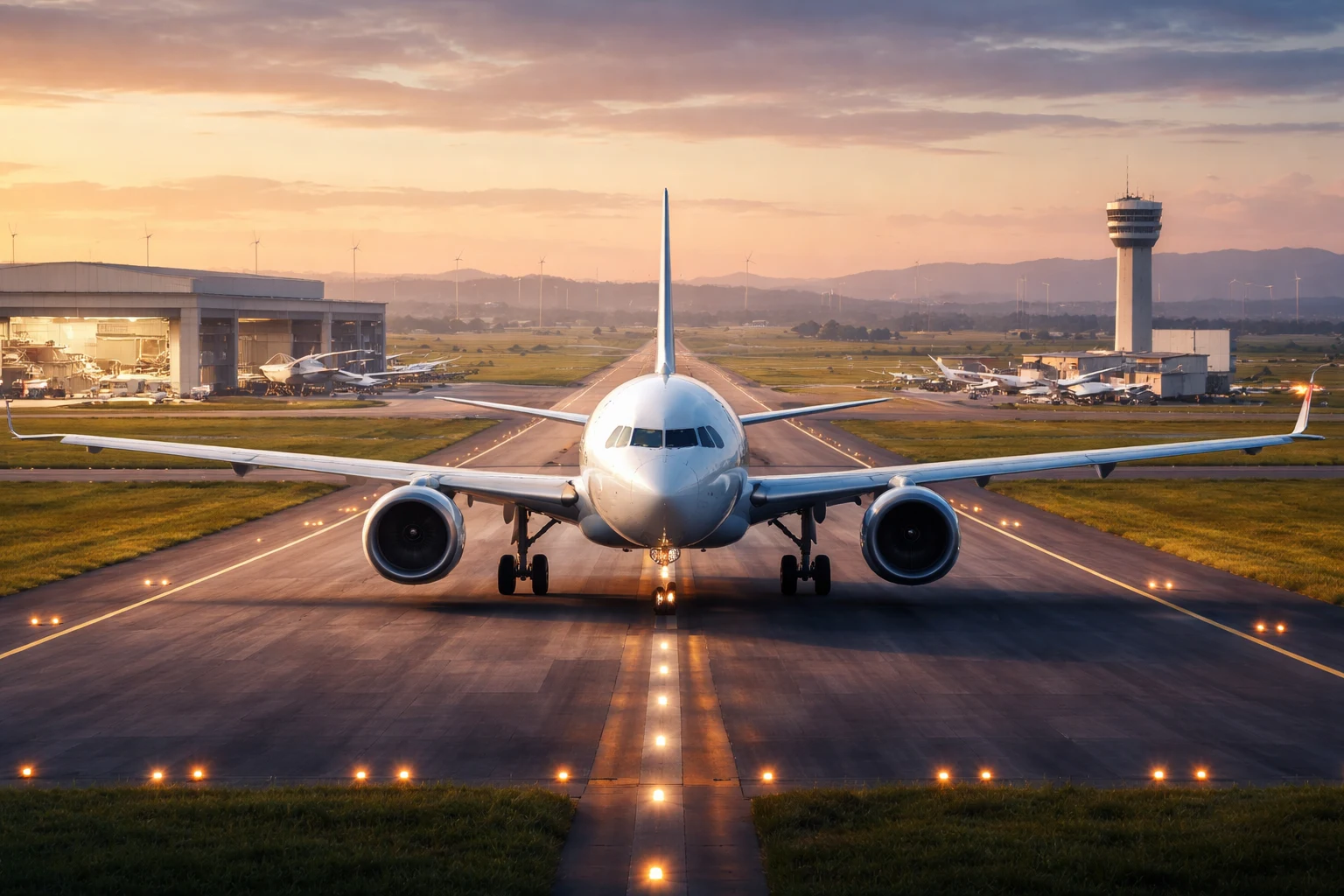
- Air transport via the Dholera International Airport
- Sea transport through nearby ports for global trade
Whether moving people or goods, every mode is integrated into a single mobility ecosystem focused on efficiency and growth.
11. Green Mobility & Environmental Transport Planning
The city emphasizes green and eco-conscious commuting.
Green Mobility Measures
- Tree-lined boulevards and shaded walkways
- Rainwater harvesting and sustainable drainage
- Non-motorized mobility zones
- Reduced carbon footprint policies
- Public transport priority planning
- Renewable energy-powered infrastructure
With these efforts, Dholera aims to become India’s leading model for environment-friendly transport development.
Conclusion: Dholera—The Mobility Blueprint for India’s Future
Dholera’s smart and green transport strategy is redefining how India will move in the coming decades. The city combines smart infrastructure, a future-ready master plan, advance technology, smart EV systems, innovative road design, smart traffic sensors, and integrated transportation data systems to form an intelligent mobility network.
Its emphasis on eco-friendly design, multimodal connectivity, and technology-driven management positions Dholera as the ideal model for India’s next-generation smart cities. As the nation scales its urban development mission, Dholera stands as a shining example of what future mobility should look like—clean, connected, efficient, and sustainable.